


A dry basement starts with how the foundation is protected from water. One of the most important decisions happens during backfilling, when the space around the foundation is filled after the foundation walls are complete.
On a recent project in Burnaby, we chose not to use typical site material containing dirt and clay. Instead, we’re using ¾-inch clear crushed rock to improve drainage around the foundation and help keep groundwater moving toward the drain tile.
Why Backfill Material Matters
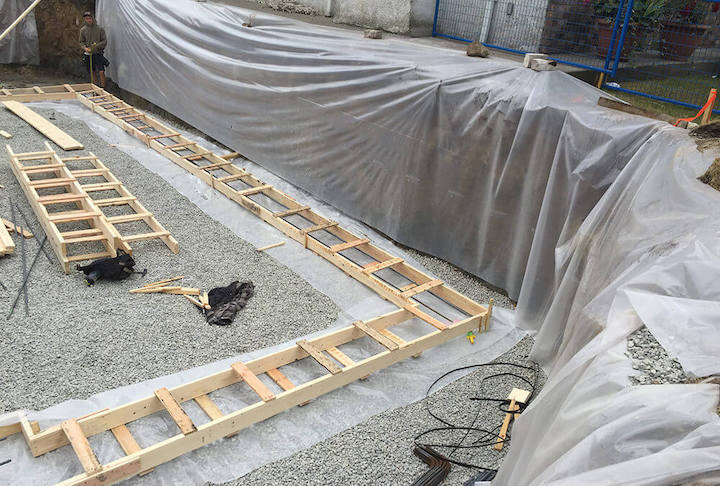
When excavating for a foundation, there is often a significant amount of soil left on site. It can be tempting to reuse that material for backfilling.
However, soil containing clay and other fine materials can restrict the movement of water. Instead of allowing groundwater to drain freely downward, the material can slow drainage and allow water to collect against the foundation.
If water builds up around the foundation, it increases the risk of moisture finding its way through small openings or weak points and eventually entering the basement.
That’s why the material surrounding the foundation matters.
What Is ¾-Inch Clear Crushed Rock?
For this project, we’re using ¾-inch clear crushed rock as the backfill material.
Unlike soil containing clay and other fine particles, clear crushed rock has open spaces between the individual stones. These spaces allow water to move freely through the material.
Think of it like a drainage pathway.
When groundwater reaches the foundation area, it can move downward through the clear rock instead of becoming trapped against the foundation wall.
A Simple Way to See How It Works

The difference is easy to demonstrate.
If you place ¾-inch clear crushed rock in a container and pour water over it, the water quickly travels through the spaces between the stones and reaches the bottom.
The same principle applies around the foundation.
Water that reaches the backfill can move downward through the clear crushed rock toward the drain tile.
Directing Water Toward the Drain Tile
The goal isn’t simply to keep water away from the foundation—it is to give that water somewhere to go.
The clear crushed rock provides a highly permeable path around the foundation, allowing groundwater to move downward toward the perimeter drain tile.
The drain tile then collects and directs that water away from the foundation.
This creates a complete drainage strategy rather than relying on the soil around the home to naturally move water away.
A “Belt and Suspenders” Approach to a Dry Basement
At Clay Construction, we often describe this as our “belt and suspenders” approach to keeping basements dry.
We don’t rely on one product or one layer of protection.
Instead, multiple systems work together to manage water, including:
- Foundation waterproofing
- Drainage membranes
- Clear crushed rock
- Perimeter drain tile
- Proper site drainage
Each component serves a purpose, and together they create a more reliable system for managing groundwater.
Building for Long-Term Protection

Most homeowners will never see the material surrounding their foundation once construction is complete.
But that doesn’t make it unimportant.
In fact, these hidden decisions can have a major impact on the long-term performance of a home. Choosing a backfill material that allows water to drain freely is one more way to reduce the risk of moisture problems before they ever reach the basement.
At Clay Construction, we believe the quality you don’t see is just as important as the quality you do.
Because every detail matters.
— Larry Clay
The Clay Way™
Recent Comments